Common Name: Vegetable Glycerin
Origin: Typically sourced from soy, palm, or coconut oil (varies based on supplier)
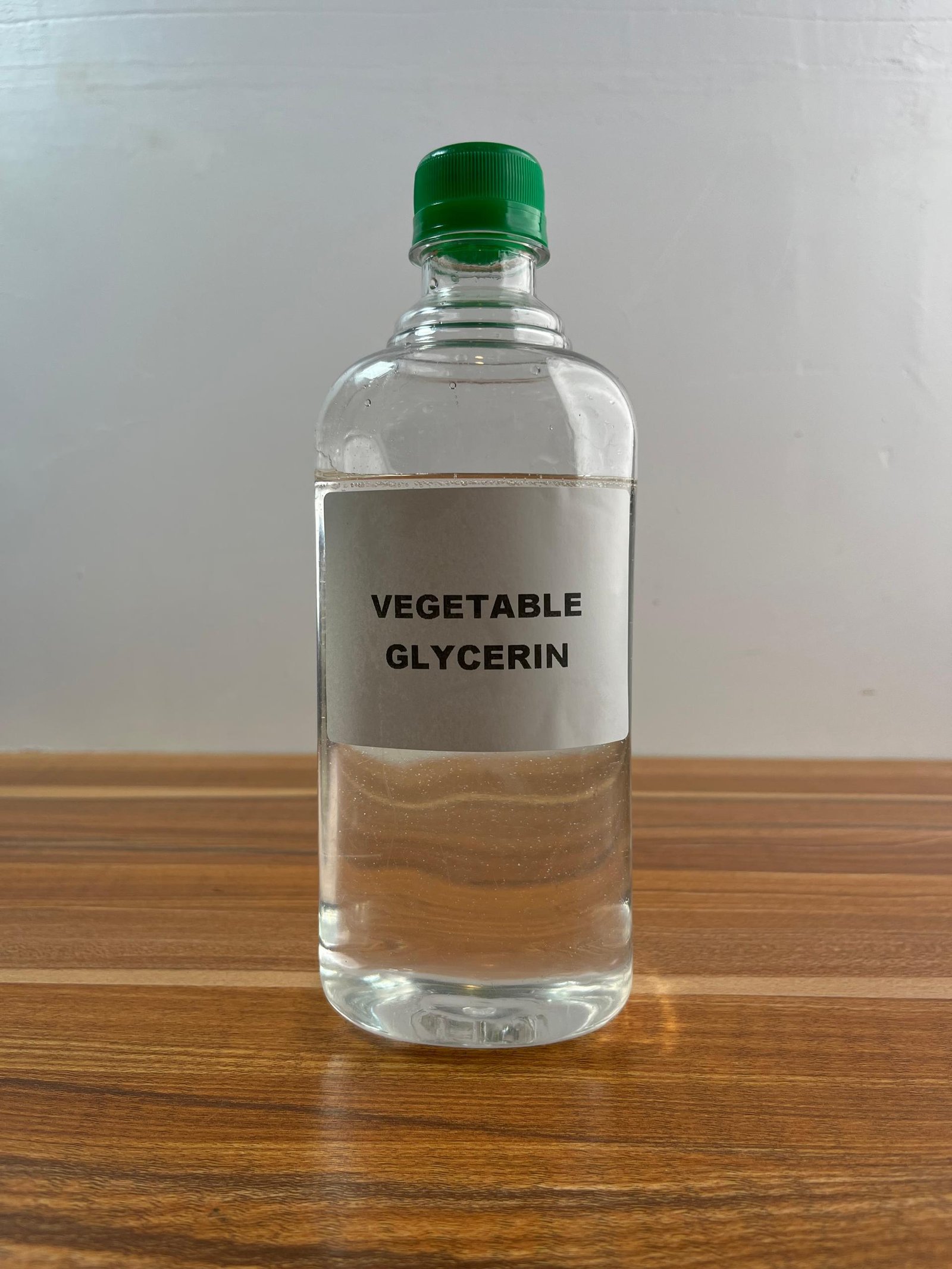
Vegetable Glycerin is a clear, odorless, and viscous liquid derived from plant-based oils, commonly coconut or palm. It is a natural humectant, meaning it draws moisture from the air into the skin and helps retain hydration. Vegetable Glycerin is widely used in skincare products, cosmetics, and food items for its ability to provide smooth texture and maintain moisture levels. It is also known for its mild and non-irritating properties, making it suitable for sensitive skin.
Vegetable Glycerin is commonly found in moisturizers, soaps, shampoos, and as a sweetener in certain food products. In addition to its cosmetic uses, it also has pharmaceutical applications, such as in cough syrups and oral care products, due to its soothing and hydrating properties.
POTENTIAL HEALTH BENEFITS
Moisturizes Skin: As a humectant, it helps draw moisture into the skin, keeping it hydrated and soft. Ideal for dry or sensitive skin.
Improves Skin Elasticity: Regular use of vegetable glycerin can improve skin’s elasticity, leaving it looking smooth and healthy.
Soothes Skin: It has calming properties, making it beneficial for skin prone to irritation or inflammation.
Balances Oil Production: Can help balance oil production in the skin, making it useful for both dry and oily skin types.
Hair Care Benefits: Helps hydrate and add shine to hair, reducing frizz and enhancing softness when used in hair products.
Supports Wound Healing: It can promote faster healing of minor cuts and abrasions by keeping the skin moisturized and protected.
Mild Sweetener: In food applications, vegetable glycerin can be used as a natural, low-calorie sweetener alternative to sugar, making it a popular option in sugar-free and diabetic-friendly recipes.
HOW TO USE
In Skincare Products: Add to creams, lotions, or serums to increase moisture retention and smooth the skin.
In Hair Care: Incorporate into conditioners, hair masks, or oils to hydrate and add shine.
In Soaps: Use as a key ingredient in making soap to enhance its moisturizing properties.
As a Sweetener: Use in homemade health beverages, smoothies, or low-sugar recipes as a mild sweetener alternative.
In Lip Balms: Vegetable glycerin can be included in lip balms to keep lips soft and hydrated.
In DIY Recipes: It can be used as a base ingredient in various DIY beauty and wellness recipes, such as face masks, body scrubs, and hydrating sprays.
PRECAUTIONS
Patch Test: Though generally safe, always conduct a patch test before applying to larger areas of the skin to ensure no allergic reaction occurs.
Avoid Eyes: Take care to avoid direct contact with the eyes. If contact occurs, rinse thoroughly with water.
Do Not Ingest in Large Quantities: While it is safe for consumption in small amounts as a sweetener, excessive ingestion may cause digestive discomfort.
Not for Use in Infants: Avoid using in products for infants or young children unless advised by a healthcare provider.
This product is not evaluated by the Food and Drug Administration (FDA). It is intended for external use and educational purposes only and is not designed to diagnose, treat, cure, or prevent any disease.

Reviews
There are no reviews yet.